In Sub-Saharan Africa, as in much of the world, reporting on sexual orientation, gender identity and gender expression (SOGIE) can be tricky. Cultural taboos, entrenched stereotypes, social hostilities, legal prohibitions and editorial censorship often distort coverage of these sensitive topics. Add religion to the mix and producing responsible journalism on sexual and gender minorities can seem impossible.
This policy brief considers the provision of shelter services to victims of domestic violence and is done in relation to the Heinrich Böll Foundation (HBF) and the National Shelter Movement of South Africa‘s (NSM) “Enhancing State Responsiveness to GBV: Paying the True Costs” project. Funded by the European Union, this project aims to support state accountability for adequate and effective provision of domestic violence survivor support programmes, specifically those associated with the provision of shelter for abused women.
Engender is a television series focussing on feminism, gender issues and related concepts. The first 3 episodes of the pilot series explored the concept of feminism; feminism and intersectionality; and gendered representations in the media. The Engender Resource Kit mirrors the episodes and was developed from research undertaken for the series.
Cape Town is oft labelled the gay capital of Africa. For a great number of its LGBTIQ citizens however, the city remains a cryptic and rather inaccessible space.
More than twenty years into democracy acts of violence against women have not visibly decreased in South Africa. This publication unpacks the many inter-related factors that continuously contribute to high levels of violence against women and hopes to contribute to more strategic and collaborative action.
With this edition of Perspectives, the Heinrich Böll Foundation seeks to unpack some of the underlying tensions and challenges facing the promotion of sexual and reproductive rights on Africa.
This publication documents an exchange project undertaken by the India and South Africa offices of the Heinrich Böll Foundation on sexual violence between 2013 and 2015. The project sought to analyse and raise debates on what drives and sustains sexual violence against women in these two countries and to determine whether strategies to prevent and redress this are working. A documentary based on the project is also available for viewing.
This report is a follow-up to the preliminary report produced by the Women’s Trust (TWT) and the Research and Advocacy Unit (RAU) in early 2014 on the effectiveness of the SiMuka! Zimbabwe, Woman, Get Counted! Register to Vote! in getting women to register to vote and to vote. This report goes further to note that whilst it is encouraging to see women turn out to vote in elections, and even more gratifying to see that the turn out can be strongly increased by woman to woman advocacy, there is always need to conduct a reality check on the actual process of the election and its outcome. This report investigates whether what happened before, during and after the elections affects women’s views of the elections and whether this differs for women in urban areas as for women in rural areas.
This review of the national budget for 2014, as delivered by finance minister Pravin Gordhan on 26 February 2014, gauges the extent to which government invests in what it has identified as priorities for the country and assesses the impact of government spending choices for the 2014/15 financial on women.
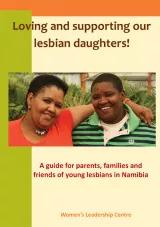
This booklet aims to help parents, families and friends of young lesbians to better understand and overcome their fears and prejudices so that they can give them the respect, love and support they need and deserve.