South Africa is in the grip of a femicide crisis, with firearms playing a leading role in the murder of women. This brief, developed by our partner, Gun Free South Africa, outlines six key recommendations to strengthen gun control, close legal loopholes, and prevent firearms from falling into the hands of those who pose a threat to women’s safety.
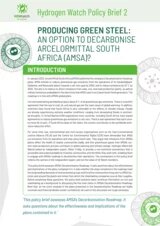
The policy brief introduces basic concepts around the complexities of steelmaking, including why it has historically been seen as ‘hard to abate’ in terms of reducing the greenhouse gas emissions from steel production. It aims to provide a non-technical commentary on AMSA’s Decarbonisation Roadmap suitable for frontline communities and the NGOs they work with to understand and engage with the plans.
Our partner, the Hate Crimes Working Group (HCWG), has been lobbying for a law against hate crimes and hate speech since 2018. This brief was developed to give policy and lawmakers an impression of the unacceptably high and ongoing cost in human life, equality, and dignity experienced in 2021 alone.
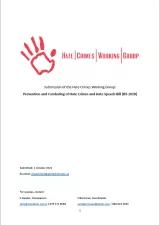
The Hate Crimes Working Group has submitted written comments to Parliament's Portfolio Committee on Justice and Correctional Services, on the long-awaited Prevention and Combating of Hate Crimes and Hate Speech Bill.
A submission by two of our partners to the Committee on the Elimination of Discrimination against Women (CEDAW) in preparing for the review of the implementation of CEDAW by South Africa during the 80th Session (2021).
The long, hard road towards the recognition of rural land rights in South Africa has been burdened by our country’s history, now exacerbated by new laws that threaten rural democracy and threaten to dissolve spaces in which rural women can assert their rights and address challenges they face. This publication features the stories of four such women and their experiences of fighting against inequality and for citizen's land rights in South Africa.
This publication is one of a series of provincial studies on women's uses of shelters undertaken by the HBF and the National Shelter Movement of SA's EU-supported 'Enhancing State Responsiveness to GBV: Paying the True Costs' project. The publication describes women's uses of domestic violence shelters paying particular attention to women's mental health needs as well as government policy and budgets in relation to the provision of sheltering services in the Eastern Cape and Northern Cape.
This research paper explores responses by the police to victims of domestic violence, specifically, in their capacity to refer women to shelter services as required by legislation. The paper is associated to the Enhancing State Responsiveness to GBV: Paying the True Costs, a project of the HBF and the NSM.
In S v Baloyi the Constitutional Court placed a clear duty on the state to address domestic violence. Shelters disrupt this violence in significant ways but are significantly under-funded. This brief examines existing policy around shelters for abused women and recommends how this can be expanded and costed to more effectively uphold women’s rights and needs.
Shelters provide critical services to abused women, yet, most are chronically under-funded and highly variable. Current government allocations to shelters are not informed by a costing framework. This results in services being driven by resources rather than best practice. A new report aims to address that short-coming.
With the 2016 municipal election coalition politics has become an integral part of South Africa’s political scene. There are many lessons to be learnt from elsewhere. Hence, this paper seeks to identify the main issues and challenges prevailing in coalition politics globally.
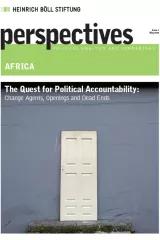
This edition of Perspectives seeks to explore how actors in the state, political parties, and civil society have been able to make those in government less certain about the future balance of power through and outside of the ballot box.
This publication is the first of a series of shadow reports that the Heinrich Böll Foundation and the National Shelter Movement of South Africa have produced in relation to their ‘Enhancing State Responsiveness to Gender Based Violence: Paying the True Costs’ project. The publication was partly produced with the Tshwaranang Legal Advocacy Centre to End Violence against Women.
This publication is the second of a series of shadow reports that the Heinrich Böll Foundation and the National Shelter Movement of South Africa have produced in relation to their ‘Enhancing State Responsiveness to Gender Based Violence: Paying the True Costs’ project. The publication was partly produced with the Tshwaranang Legal Advocacy Centre to End Violence against Women.This report was produced with the financial support of the European Union.
Which African leaders qualify as an icon? Perhaps this is always a controversial question, but it was much easier to answer, say, 25 years ago, when the public memories of Pan-Africanist champions such as Kwame Nkrumah and Julius Nyerere were still fresh, Nelson Mandela had just walked out of prison, and Robert Mugabe was a widely respected leader.
In Sub-Saharan Africa, as in much of the world, reporting on sexual orientation, gender identity and gender expression (SOGIE) can be tricky. Cultural taboos, entrenched stereotypes, social hostilities, legal prohibitions and editorial censorship often distort coverage of these sensitive topics. Add religion to the mix and producing responsible journalism on sexual and gender minorities can seem impossible.
This policy brief considers the provision of shelter services to victims of domestic violence and is done in relation to the Heinrich Böll Foundation (HBF) and the National Shelter Movement of South Africa‘s (NSM) “Enhancing State Responsiveness to GBV: Paying the True Costs” project. Funded by the European Union, this project aims to support state accountability for adequate and effective provision of domestic violence survivor support programmes, specifically those associated with the provision of shelter for abused women.
Civil society is under pressure worldwide. This e-paper focuses on dynamics and patterns of shrinking spaces and repressions on civil society with regard to natural resource struggles and takes a closer look into consultation processes and the role of the economy.
When you write about Africa, make sure to always include sad and starving characters, advises Kenyan author Binyavanga Wainana in his famously ironic essay “How to write about Africa”, which takes aim at Western prejudices. In the same way that everyday laughter has been excluded from all-too-familiar depictions of the continent, African humour and satire as a form of social and political engagement remains underexplored.
The articles gathered in this edition of Perspectives capture the complex and plural ways in which Africans are attempting to use ICTs to democratise democracy on the continent, the challenges they face, and the valuable lessons learned.